
The True Benefits of Digital Transformation Using the CaelumOne DMS-ECM Platform
Digital transformation through the CaelumOne Document and Enterprise Content Management (DMS-ECM) Platform enables organizations to transition from fragmented, paper-based, or file-share environments (i.e. DropBox, Box, OneDrive) to a unified digital ecosystem. This transformation empowers users to create, manage, secure, and analyze information efficiently across the enterprise while ensuring compliance, transparency, and operational resilience is maintained.

Data Residency vs Data Sovereignty: Why the Distinction Matters
“Where is the data stored?” is no longer the full question.
In regulated markets, organisations increasingly ask two key different questions:
Data residency: Where is the data physically located?
Data sovereignty: Which laws apply, who can access it, and under what jurisdictional control?

What Regulators Actually Mean by “Demonstrate Compliance”
“Demonstrate compliance” is a deceptively demanding requirement.
Many organisations interpret it as having policies and training in place. Regulators, auditors, and courts typically interpret it differently:
Compliance must be provable as an operational outcome—not just documented as intent.

Chain of Custody Isn’t Just for Evidence — It’s for Every Critical Record
In regulated environments, “chain of custody” is often discussed as an evidence concept—something relevant to exhibits, physical items, or investigative materials.
But the same principle applies to many everyday records that regulators, auditors, and courts rely on: approvals, decisions, controls, and outcomes.

Vector Search vs Enterprise Search: What Most Vendors Don’t Explain
“Search” has become one of the most misunderstood terms in digital transformation.
Many vendors now promote “AI-powered search” or “vector search” as a replacement for traditional enterprise search. The implication is that semantic retrieval solves everything.
It does not…..

FOIA, ATI, PATI: Why Search Is Not the Same as Disclosure Readiness
Many organisations believe that if they can “search for documents,” they are prepared for disclosure requests.
They are not…..
Whether Under:
Freedom of Information (FOIA)
Access to Information (ATI)
Public Access to Information (PATI)
Or similar legislative frameworks
The process is far more complex than simple retrieval.

ISO 15489 and ISO 16175 Explained in Plain English
When people hear “ISO 15489” or “ISO 16175,” they often assume these standards apply only to records managers or archivists.
They do not…..
These standards define how organisations must control information if they want to operate defensibly in regulated environments.

Why DMS-ECM ROI Should Be Measured in Capacity, Not Headcount Reduction
One of the most persistent misconceptions in digital transformation using a Document Management or Enterprise Content Management platform like CaelumOne DMS-ECM automation is about reducing people.
In reality, most organizations today are already capacity constrained, not overstaffed.
Police services, financial institutions, logistics firms, and regulators are all being asked to:
Process More Volume
Meet Higher Compliance Standards
Respond Faster
Operate With the Same Resources
Modern DMS-ECM platforms do not eliminate work — they remove friction:
Less Time Spent Searching
Fewer Manual Handoffs
Fewer Errors and Rework
Clearer Accountability
The result is not fewer staff, but greater throughput with the same teams members — and critically, with less risk.

Digital Transformation Fails Without Information Governance
Many organizations invest heavily in ERP, CRM, LOS, RMS, and workflow platforms — yet still struggle to realise meaningful transformation.
The reason is deceptively simple:
Systems process transactions. Documents explain decisions.
When information governance is weak, digital initiatives inherit the same problems that existed on paper:
Duplicate Records
Unverifiable Versions
Inconsistent Retention
Manual Workarounds
Transformation stalls not because staff resist change, but because information remains fragmented across systems and departments.

The Hidden Cost of Not Knowing What You Have
One of the most common — and costly — realities inside modern organizations is this:
No one knows exactly what information they hold.
Documents exist across shared drives, email systems, cloud platforms, personal folders, and legacy applications. Some are critical records. Others should have been destroyed years ago. Most sit unmanaged.
This “dark data” creates silent risk:
Over-Retention Increases Legal Exposure
Under-Retention Compromises Compliance
Incomplete Records Weaken Investigations and Audits
Uncontrolled Access Leads to Data Leakage
When a regulator, auditor, or court asks for information, the scramble begins — not because data is missing, but because context is.

From Paper Cost to Risk Cost: Why DMS-ECM Is a Board-Level Investment
For years, document management systems were justified almost entirely on productivity:
How many minutes does it take to find a document?
How much paper can we eliminate?
That framing structure is no longer sufficient.
Today, the real cost of unmanaged information is corporate risk:
Operational,
Legal,
Regulatory,
Reputational
Across regulated industries, we increasingly see that failures are not caused by missing systems, but by missing control over information. Documents exist, but cannot be proven authentic. Emails are found, but lack context or chain of custody. Records are retained, but not defensibly destroyed.

SharePoint Premium vs Third-Party AI Extraction: Strategic Planning Points Most Executive Teams Miss
SharePoint Premium vs Third-Party AI Extraction Solutions Like CaelumOne DMS-ECM: The Cost Conversation Most Teams Miss!
A lot of organisations are looking at SharePoint Premium and assuming:
“We already pay for Microsoft — this will be the cheapest way to add AI document extraction.”
That assumption is usually true at small scale.
It becomes far less true once AI moves from experiment to operations.
Here’s the distinction that matters and why you should consider using CaelumOne DMS-ECM instead.
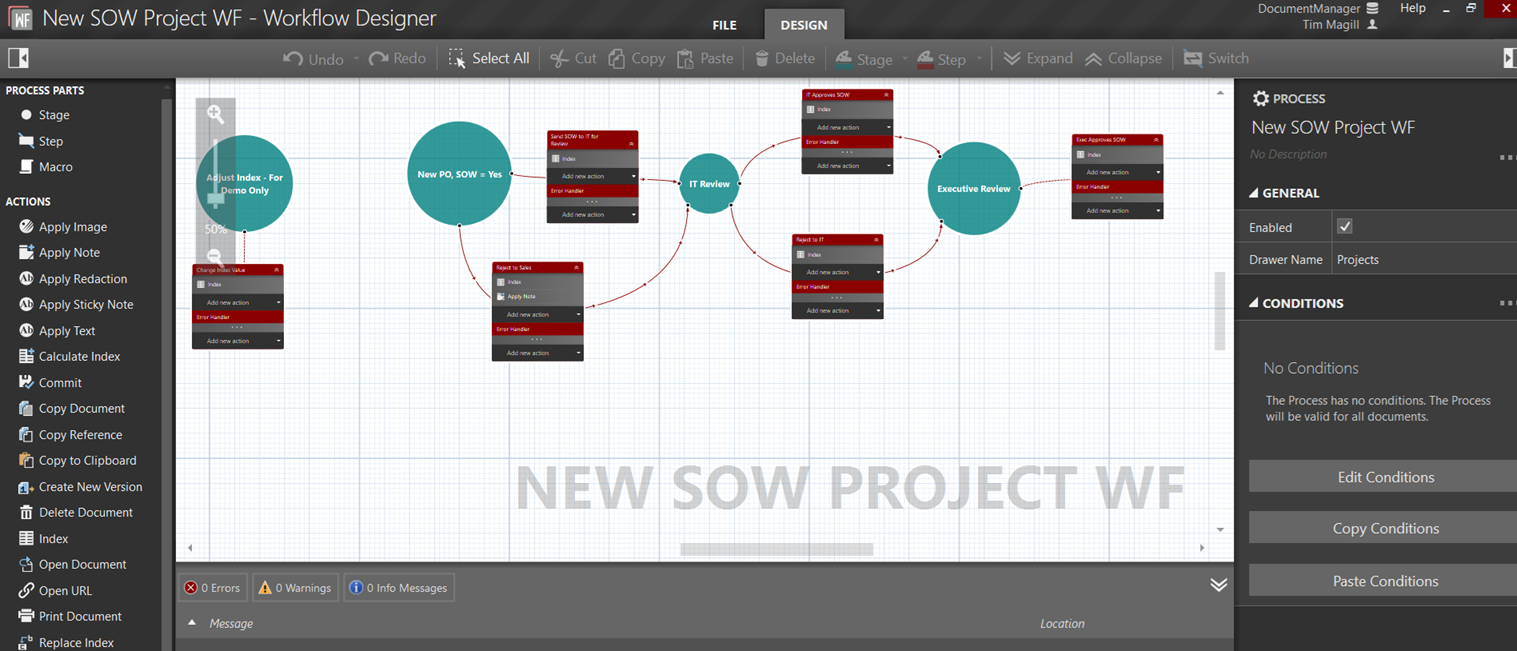
Document Workflow Automation for Small, Medium, and Large Organisations
Modern organisations operate in an environment where efficiency, accountability, and regulatory compliance are paramount. Document workflow automation plays a critical role in enabling businesses to manage information consistently, securely, and at scale.
CaelumOne Document Management and Enterprise ontent Management (DMS-ECM) provides a comprehensive document workflow automation framework that allows organisations to automate complex document-centric processes simply and efficiently. From the moment information enters the organisation, each stage of the document lifecycle—capture, review, approval, storage, retention, and disposition—can be governed through structured, repeatable workflows.
By embedding automated workflows within a document management system, organisations reduce operational risk, lower administrative costs, and ensure that business processes are executed consistently across departments.

5 Myths About Electonic Document and Content Management Solutions
5 Myths About Electronic Document and Content Management Solutions
Many Small Business owners view DMS and ECM Software Solutions as a luxury item that can’t be afforded but that is far from the truth. An efficient DMS/ECM Solution can actually result in huge financial savings for a company with the right amount of planning and foresight. Here are five common myths about DMS/ECM Solutions and Small to Medium Businesses:
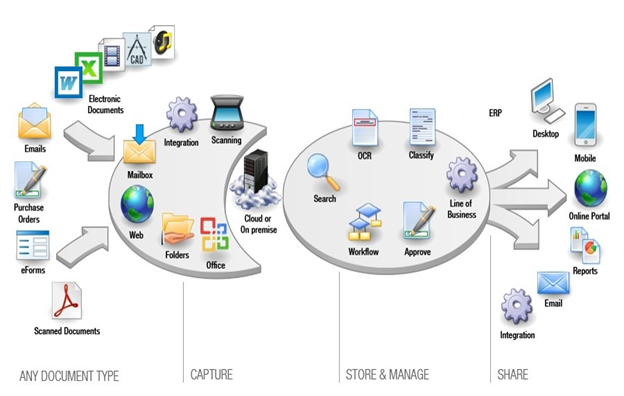
A Quick Introduction To Document Management
Document Management is defined as the “creation, storage, organization, transmission, retrieval, manipulation, update, and eventual disposition of documents to fulfil an organizational purpose”. When organizations do not have any kind of formal document management system in place, content is often created and saved in a decentralized way on scattered file shares and individual hard drives. This makes it hard for employees to find, share, and collaborate effectively on essential content and makes very difficult for organizations to make effective use of the valuable business information and data they have. Some important documents might only exist in paper format or may have been scanned and digitized to make them electronically traceable, but not necessarily searchable.